

By A referee on the green field
The Weight of the Whistle
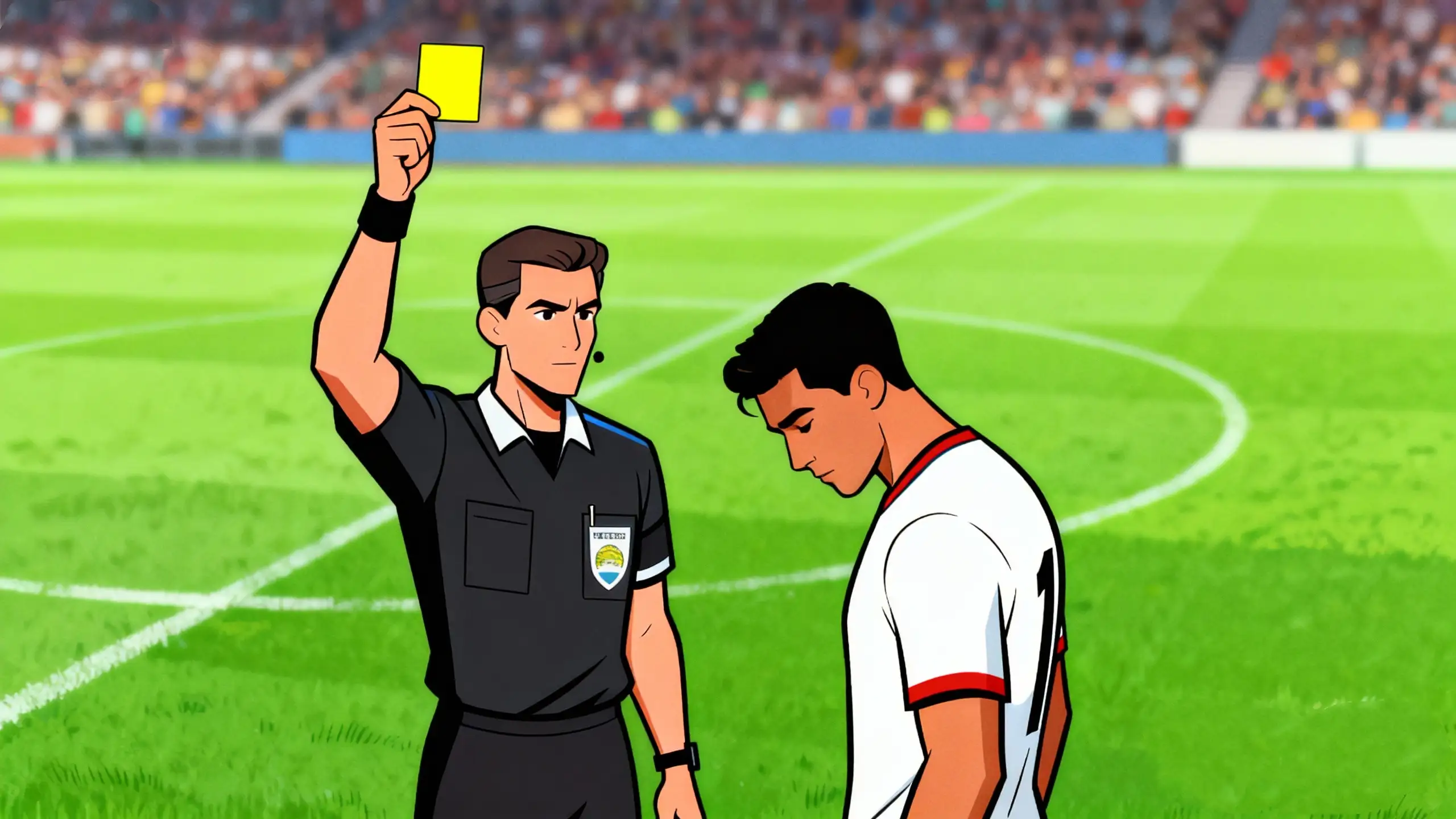
Every time I reach for my pocket, 50,000 fans hold their breath. Showing cards isn’t just about rules – it’s about managing human emotions while keeping the game safe. Here’s what actually goes through my mind during those split-second decisions.
The Three-Layer Decision Matrix
We assess every incident through three lenses:
- Danger Radar
Mental checklist:- Studs showing?
- Blindside contact?
- Head/ankle area?
“That studs-up lunge makes my stomach drop – that’s a red card waiting to happen.”
- Game Impact Scanner
- Tactical foul stopping an attack? (Automatic yellow)
- Denied obvious goal chance? (Red card territory)
“When I see a player pull back a jersey, I’m already reaching for yellow before he hits the ground.”
- Emotional Thermometer
- Rising tensions?
- Repeat offenses?
“Three late tackles from the same player? That fourth one gets yellow even if it’s softer – the message needs sending.”
VAR: My Digital Conscience
The moment after a big call is the loneliest. Now with VAR:
✅ Security Blanket
“Knowing VAR has my back on red cards lets me make bold calls with confidence.”
❌ Added Pressure
“50,000 fans screaming for VAR review while I’m trying to maintain authority – it’s a tightrope walk.”
Cards as Communication Tools
That yellow isn’t just punishment – it’s psychological warfare:
- Early yellow = “This won’t be tolerated”
- Strategic holding = Letting minor fouls go to maintain flow
- Delayed card = Allowing advantage before punishment
“Sometimes showing yellow too early kills the game’s rhythm. Timing is everything.”
When Players Test My Limits
The worst moments aren’t the obvious red cards – they’re the gray areas:
- That “professional foul” that wasn’t quite violent
- The dive that wasn’t quite simulation
- The verbal abuse that wasn’t quite audible
“In these moments, I ask myself: ‘Will this decision keep control for the remaining 70 minutes?’”
What Players Should Know
- We see your tactics – That “accidental” trip when losing possession? Obvious.
- Your reputation matters – Known divers get less benefit of doubt.
- VAR remembers everything – Those off-ball incidents aren’t invisible anymore.
Next time you question a call, remember: That card represents 20+ years of training, real-time risk assessment, and the weight of keeping the beautiful game beautiful.
Part of the data comes from:



Leave a Reply