

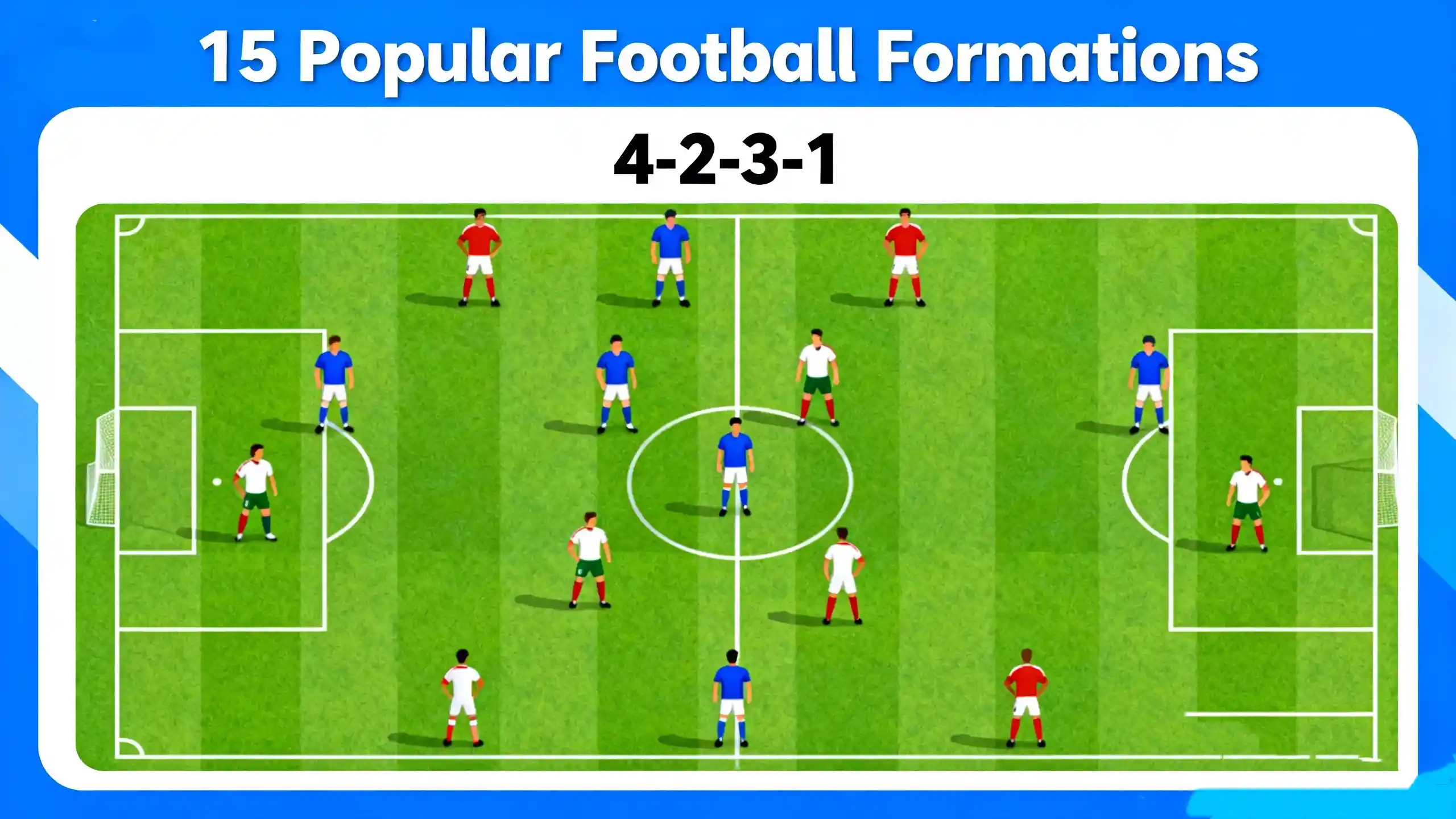
Introduction
In modern football tactics, Except for 4-2-3-1 formation,the following 15 formations are frequently used or evolved. Each of them can be found in typical club cases as their “signature” or common form. Now, let’s explain them one by one according to the formation: layout, pros and cons, and representative clubs (mainly based on typical usages in the past decade or so).
More lineup images can be generated using the Football Formation Diagram Generator
1. 4 – 2 – 3 – 1 Formation
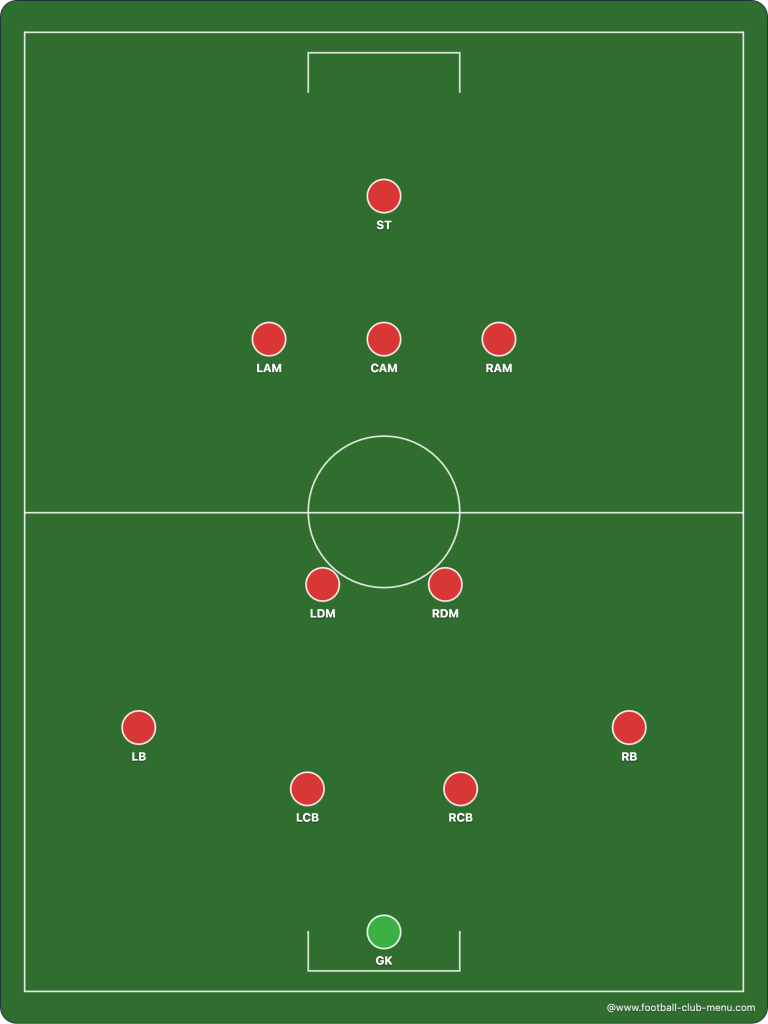
Layout
- 4 defenders
- 2 defensive midfielders as a screen (double defensive midfielders)
- 3 attacking midfielders (left and right wingers + No.10)
- 1 center – forward
Pros
- The double defensive midfielders ensure the safety in front of the defense, making it one of the most stable balanced formations in modern football. The three attacking midfielders have great freedom, being able to cut inside, switch positions, and form a pseudo 4 – 3 – 3 or 4 – 4 – 1 – 1.
Cons
- The single center – forward bears a huge burden, having to hold up the ball, act as a pivot, and counter – attack. If the three attacking midfielders’ defensive participation is insufficient, the double defensive midfielders will be under great pressure.
Representative Clubs
- Real Madrid and Chelsea in Mourinho’s era often used 4 – 2 – 3 – 1 as the main formation. Germany under Löw and the early Tottenham Hotspur under Pochettino also highly relied on this structure.
2. 4 – 3 – 3 Formation
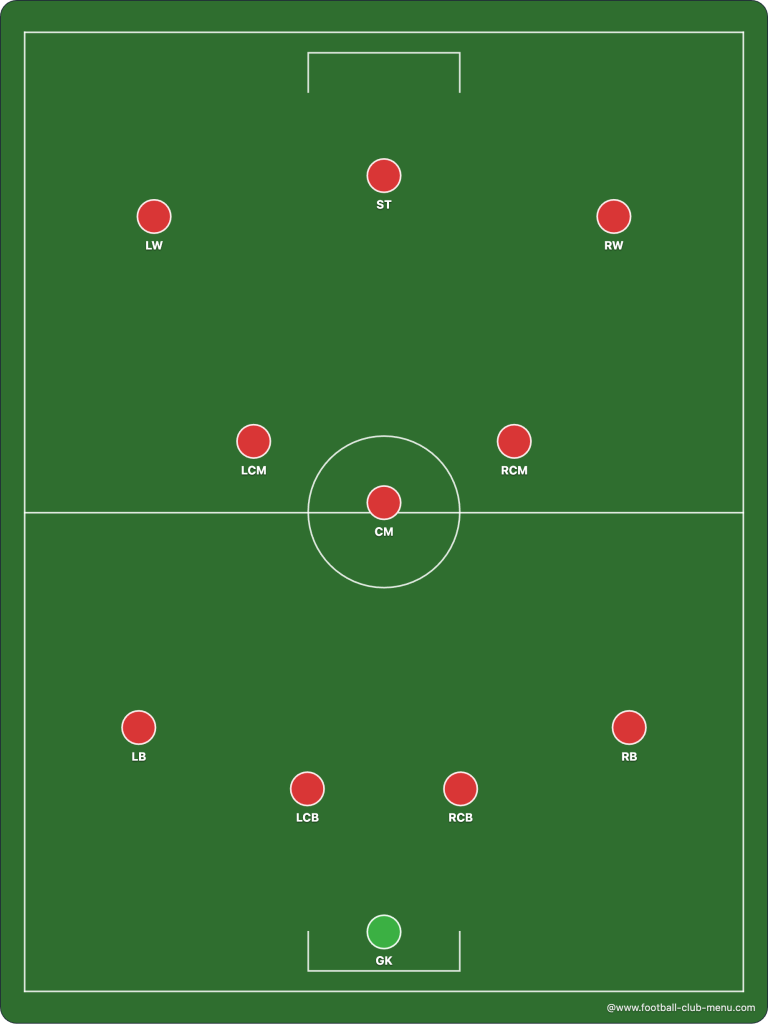
Layout
- 4 defenders
- 3 midfielders (various combinations like No.6 + No.8+ No.8/No.10)
- 3 forwards (center – forward + left and right wingers)
Pros
- It is extremely suitable for high – pressing and ball – control. Wingers can cut inside or stretch the width on the wings. The three midfielders can divide their tasks evenly: one for sweeping, and two for organizing and making forward runs.
Cons
- When wingers don’t defend well, the wing defense is likely to be outnumbered 2 – 1 by the opponent. If there is no real No.6, the protection in front of the defense is insufficient.
Representative Clubs
- It is one of the basic formations of Barcelona and Manchester City in Guardiola’s era. Liverpool under Klopp (Salah – Firmino – Mane) built high – pressing and rapid transitions through 4 – 3 – 3.
3. 4 – 4 – 2 Formation
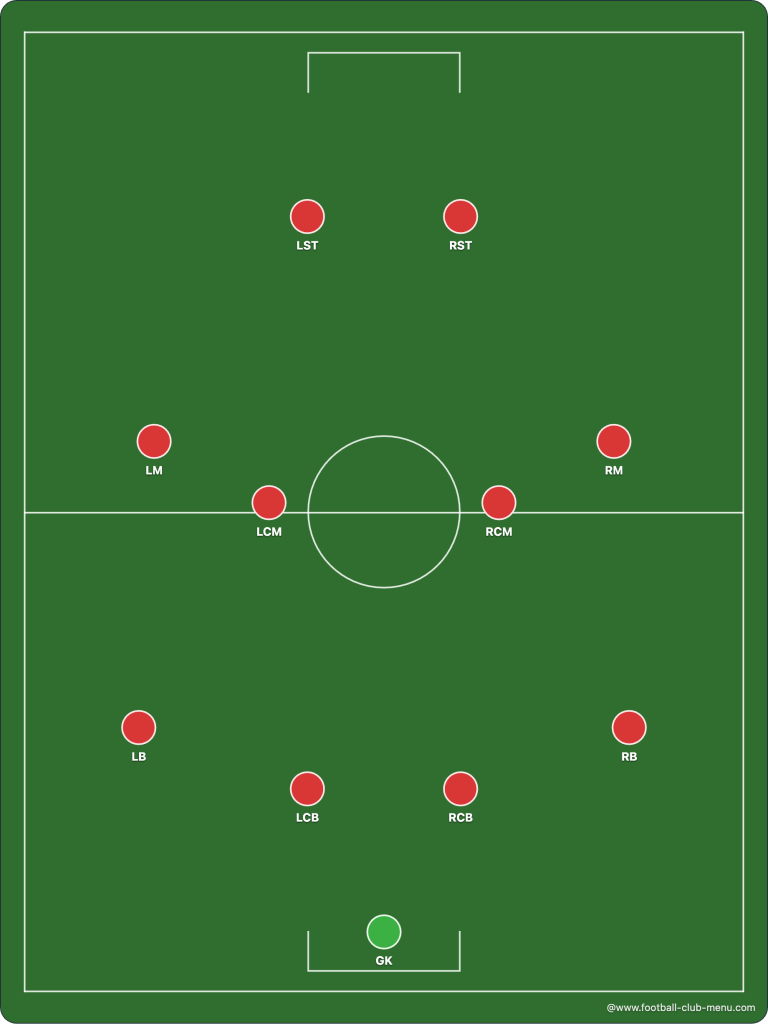
Layout
- 4 defenders: 2 center – backs + 2 full – backs
- 4 midfielders: 2 wingers + 2 central midfielders
- 2 strikers: Double strikers
Pros
- It has a clear structure, balanced offense and defense, and simple role – division, which suits teams with good physical fitness and strong wing capabilities. Also, the two four – man lines are compact, and the defensive positions can easily form an overall press.
Cons
- The midfield is often outnumbered by 3 – midfielder formations (such as 4 – 3 – 3, 4 – 2 – 3 – 1). If the wingers retreat too deep, the double strikers may get disconnected from the midfield.
Representative Clubs
- Manchester United in Ferguson’s era and Atletico Madrid in the early stage of Simeone’s tenure both based on 4 – 4 – 2 and adjusted according to opponents.
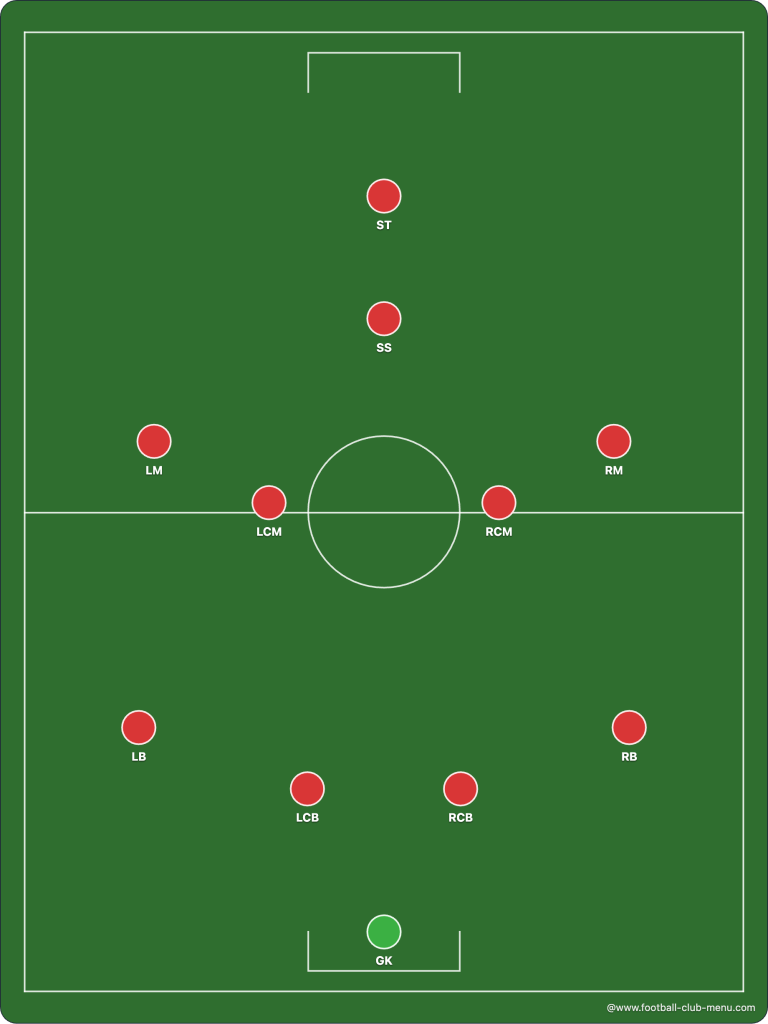
4. 4 – 4 – 1 – 1 Formation
Layout
Similar to 4 – 4 – 2, but one striker withdraws to become a second striker/attacking midfielder, standing behind the center – forward.
Pros
- It adds a connection point. The attacking midfielder can organize attacks and score, linking the midfield and the center – forward. Also, during defense, it can easily contract into 4 – 5 – 1, strengthening the midfield density.
Cons
- The role of the attacking midfielder is highly demanding. If they can’t retreat and penetrate forward well, the formation may be disrupted. Similar to 4 – 4 – 2, there are problems on the wings, and the midfield may be short – handed in confrontations.
Representative Clubs
- Around 2008, Manchester United often used Wayne Rooney to play behind the center – forward, approaching the 4 – 4 – 1 – 1 formation. Tottenham Hotspur in Pochettino’s period also had a stage similar to 4 – 4 – 1 – 1 (Harry Kane + an attacking midfielder as the No.10).
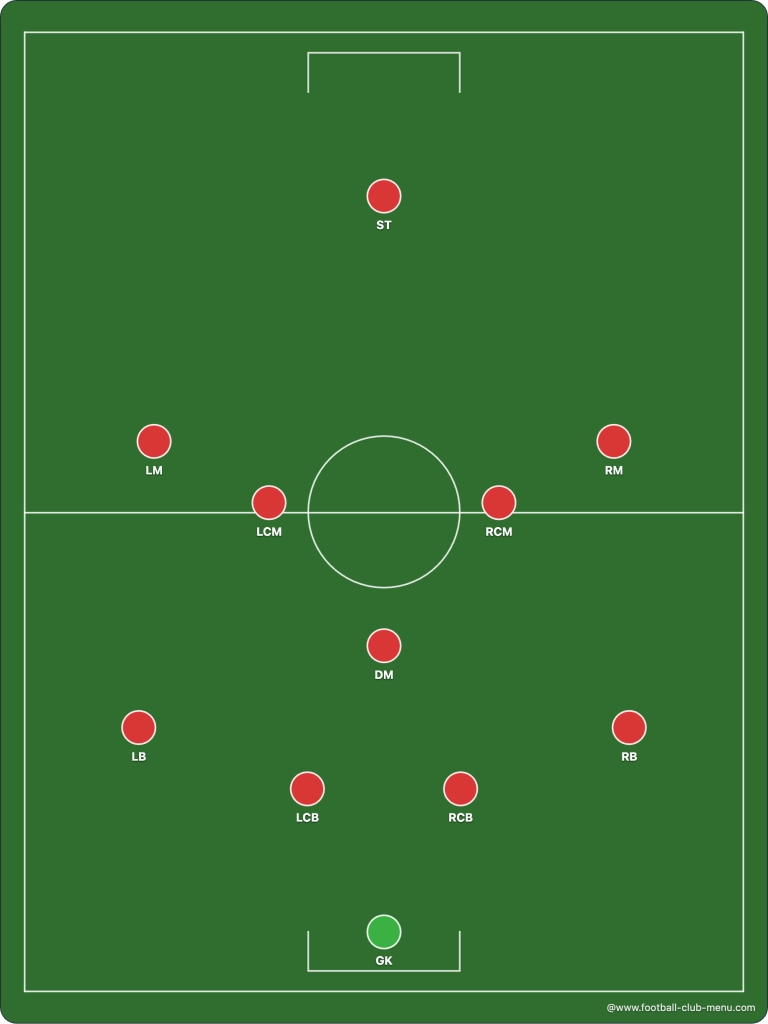
5. 4 – 1 – 4 – 1 Formation
Layout
- 4 defenders
- 1 single defensive midfielder
- 4 midfielders in the front (can be 2 inside forwards + 2 side midfielders)
- 1 center – forward
Pros
- The single defensive midfielder forms a “screen” in front of the defense. The four – man midfield line presses high, which is conducive to front – court pressure. During attacks, it can naturally change into 4 – 3 – 3 or 4 – 2 – 3 – 1.
Cons
- The defensive midfielder has to cover a large area, so the selection of players is very demanding. The single center – forward is still likely to be isolated and needs the midfielders on both sides to frequently move inwards and make forward runs.
Representative Clubs
- In some seasons of Guardiola’s Manchester City, with Rodri at the back + four high – position midfielders, it is a common variation of 4 – 1 – 4 – 1.
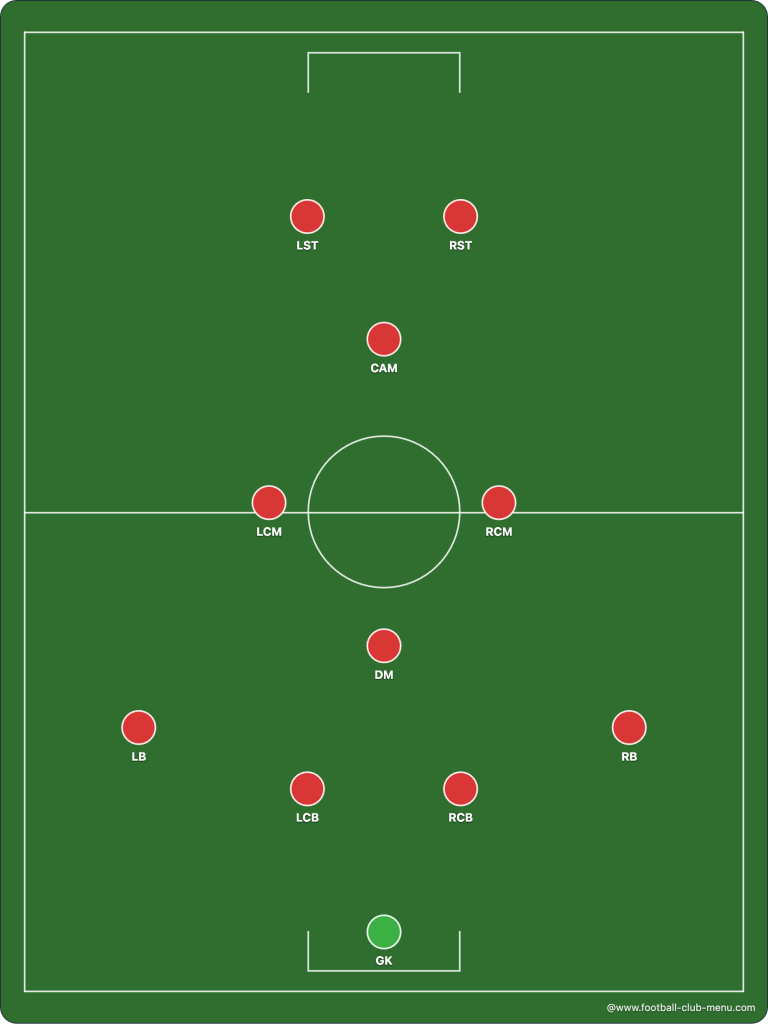
6. 4 – 1 – 2 – 1 – 2 Formation (Diamond Midfield)
Layout
- 4 defenders
- 1 defensive midfielder + 2 side midfielders + 1 attacking midfielder (in a diamond shape)
- Double strikers
Pros
- There is an advantage in the number of players in the midfield, which is suitable for short – passing penetration and midfield combination attacks. The attacking midfielder has a high degree of freedom and is an ideal stage for the traditional “No.10”.
Cons
- There are natural gaps on the wings, and full – backs need to provide a great deal of width and physical support. During defense, it is likely to be targeted by wing – strong teams like 4 – 3 – 3.
Representative Clubs
- AC Milan in Ancelotti’s era (Pirlo – Gattuso – Seedorf – Kaka) is a classic template for the diamond midfield. Some Italian – style clubs also prefer this structure in specific seasons.
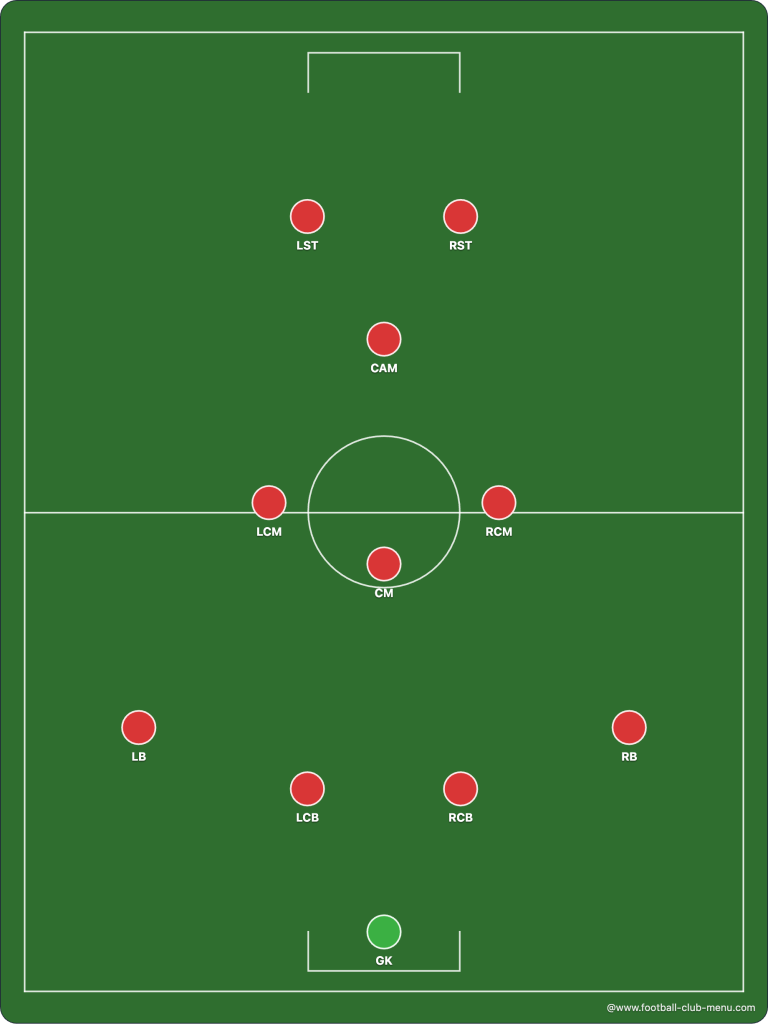
7. 4 – 3 – 1 – 2 Formation
Layout
- 4 defenders
- 3 midfielders (biased towards the middle)
- 1 attacking midfielder (No.10)
- Double strikers
Pros
- The midfield is extremely dense. The midfielders and the attacking midfielder can build a complex short – passing network. The attacking midfielder behind the double strikers is very suitable for the “through – ball + second – ball” play.
Cons
- The attack and defense on the wings highly depend on the full – backs. Against opponents who emphasize wing width and transition speed in modern football, the defensive pressure is huge.
Representative Clubs
- Many South American clubs and some Argentine teams use this structure in the league. It was also the preferred formation of some ball – controlling teams in Serie A.
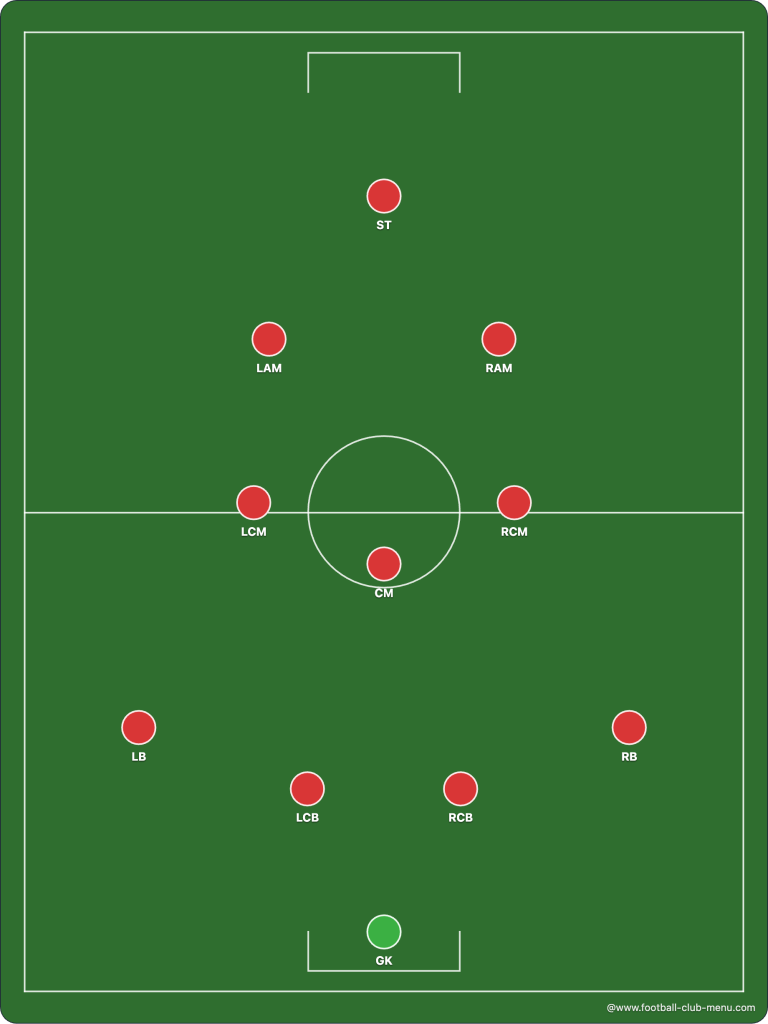
8. 4 – 3 – 2 – 1 Formation (Christmas Tree)
Layout
- 4 defenders
- 3 midfielders at the back (stable)
- 2 attacking midfielders (inside – moving “attacking midfielders”)
- 1 center – forward
Pros
- There are 5 players stacked in the midfield, with strong control, suitable for slow – paced, progressive penetration. The two attacking midfielders move in the ribs, and their inside – cutting shots or through – balls are very threatening.
Cons
- There is a lack of width. If the full – backs can’t support at a high position, it’s difficult to stretch the opponent’s defense. When the center – forward is blocked, there is a lack of a backup plan on the wings.
Representative Clubs
- Ancelotti would choose the “Christmas Tree” formation to face strong teams in some stages of his coaching in Serie A or the Premier League. Some national teams also use this ball – control structure in major competitions.
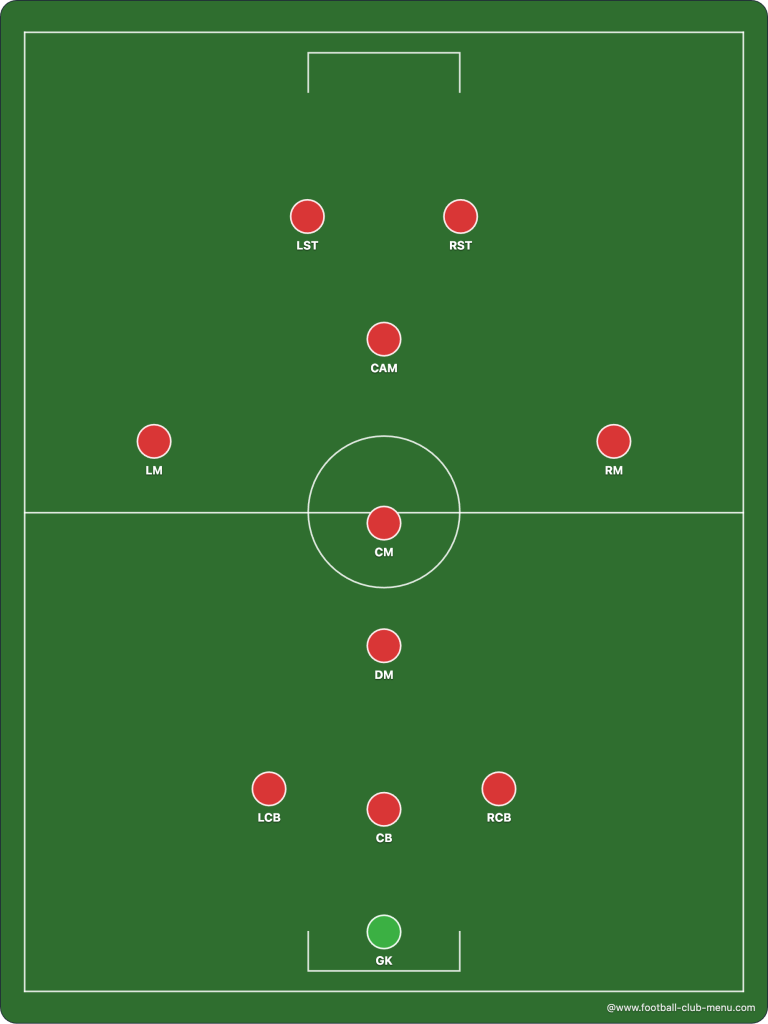
9. 3 – 5 – 2 Formation
Layout
- 3 center – backs
- 2 wing – backs (attack – and – defense – capable)
- 3 midfielders
- Double strikers
Pros
- During defense, it can retreat to 5 defenders, with a very high defensive density in the penalty area. When wing – backs make forward runs, there are rich wing widths and offensive points. The double strikers are suitable for through – balls and high – balls.
Cons
- The requirements for wing – backs are extreme: they need to be able to run, defend, cross, and move inwards. When the three midfielders are suppressed, the three center – backs will be exposed to large – space confrontations.
Representative Clubs
- Juventus in Allegri’s era, and Juventus, Chelsea, and Inter Milan under Conte all regard 3 – 5 – 2/3 – 4 – 3 as one of their signature formations.
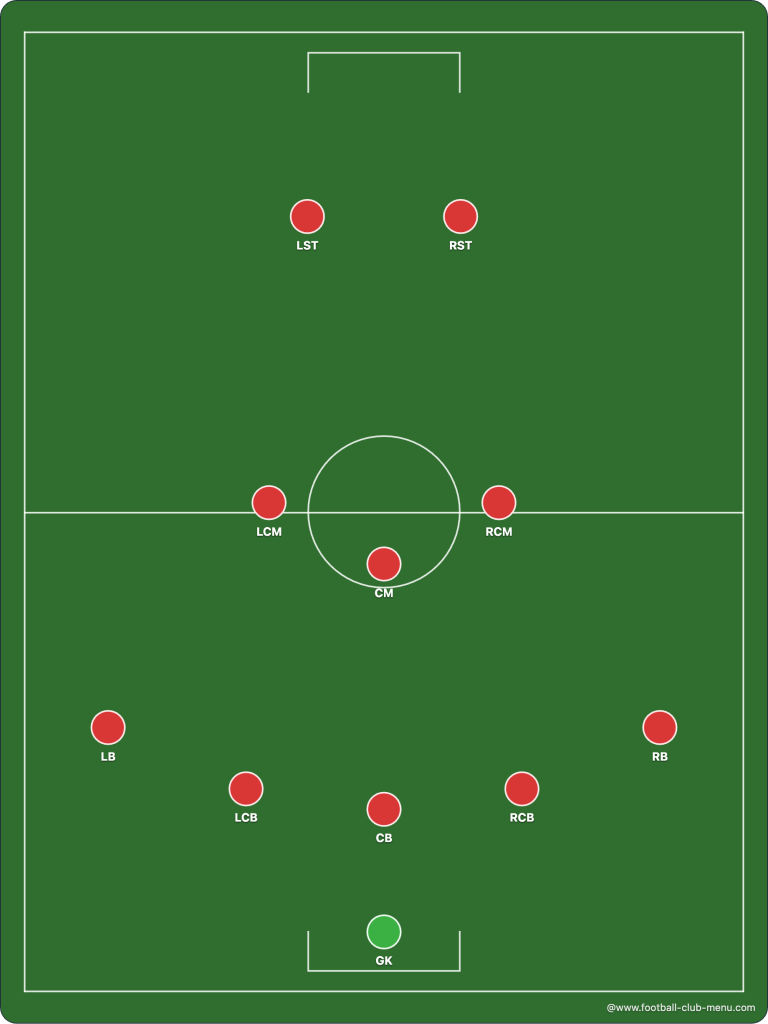
10. 5 – 3 – 2 Formation
Layout
- Nominally 5 defenders (3 center – backs + 2 full – backs in a lower position)
- 3 midfielders
- 2 strikers
Pros
- It is a typical counter – attacking formation, suitable for playing against opponents with stronger paper strength. It ensures there are enough players in the penalty area and waits for opportunities to pass long balls or through – balls to the strikers after solid defense.
Cons
- There are not enough players during ball – control periods. The offensive levels are simplified, and the team is likely to be pressed in its own half. If the strikers can’t hold the ball and advance, the whole team will have difficulty getting out of their own half.
Representative Clubs
- Some underdogs in the World Cup and European Cup, as well as relegation – threatened teams, often use this formation. Some 中下游 teams in Serie A also use 5 – 3 – 2 as their survival configuration.
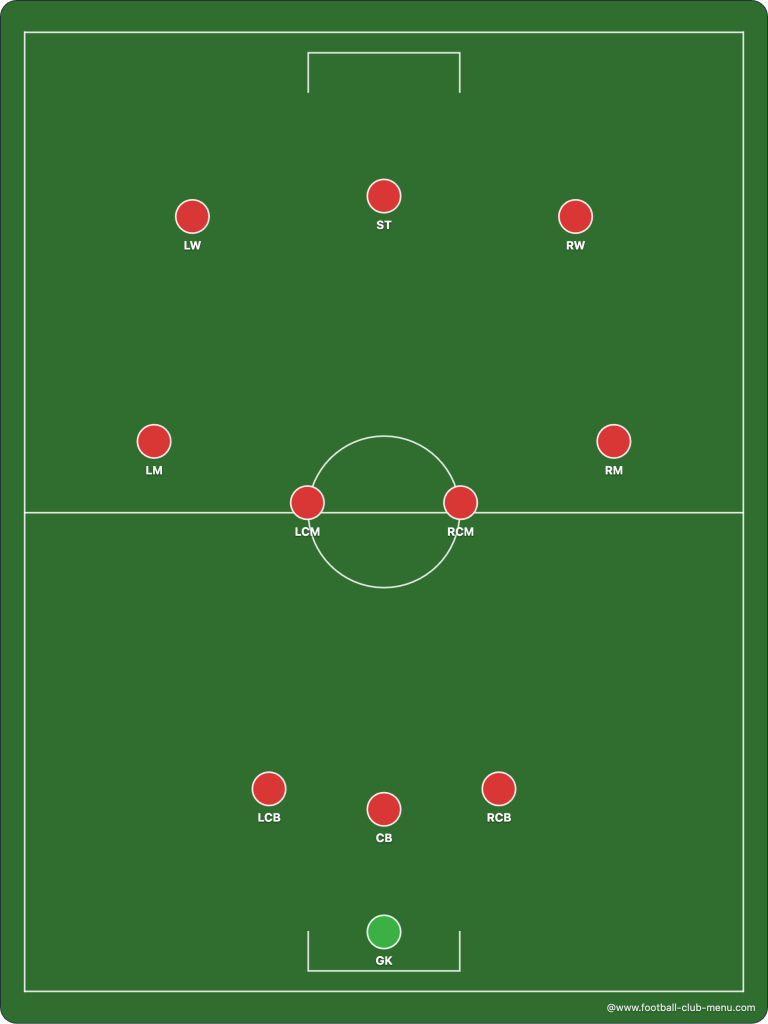
11. 3 – 4 – 3 Formation
Layout
- 3 center – backs
- 2 wing – backs + 2 central midfielders
- 3 forwards (wingers + center – forward)
Pros
- It has strong front – court pressing ability. The three forwards and high – position wing – backs can block the opponent’s back – court ball – distribution. During attacks, there are many players and a wide formation, which is conducive to tearing apart the opponent’s wings and ribs.
Cons
- There are only 2 midfielders in the middle. If they are suppressed by the opponent’s 3 – midfielder formation, it will be difficult. When wing – backs don’t retreat in time, the center – backs on the sides will be forced to defend on the sidelines for a long time.
Representative Clubs
- Conte’s early 3 – 4 – 3 at Chelsea led to a Premier League – winning season. In the early stage of Tuchel’s coaching at Chelsea, 3 – 4 – 3/3 – 4 – 2 – 1 formations were also widely used.
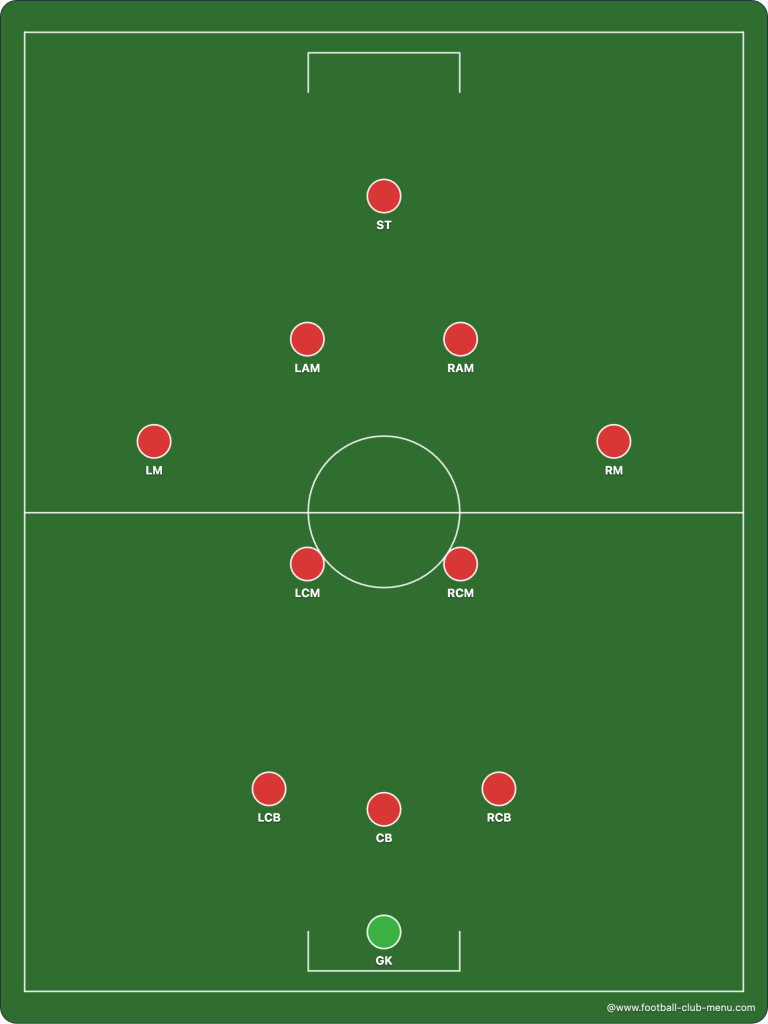
12. 3 – 4 – 2 – 1 Formation
Layout
- 3 center – backs
- 2 wing – backs + 2 central midfielders
- 2 attacking midfielders (attacking midfielders)
- 1 center – forward
Pros
- During defense, it can retract into 5 – 4 – 1, which is extremely stable. During attacks, the two attacking midfielders get the ball in the ribs, being able to feed the center – forward and also having their own scoring threats.
Cons
- If the center – forward can’t contain and act as a pivot, the two attacking midfielders will lack a “destination”. The wing – backs still bear a huge offensive and defensive task.
Representative Clubs
- It was the signature formation of Tuchel’s Chelsea in the Champions League – winning season. Many Bundesliga teams (such as in some stages of Nagelsmann’s coaching) also like to use this structure.
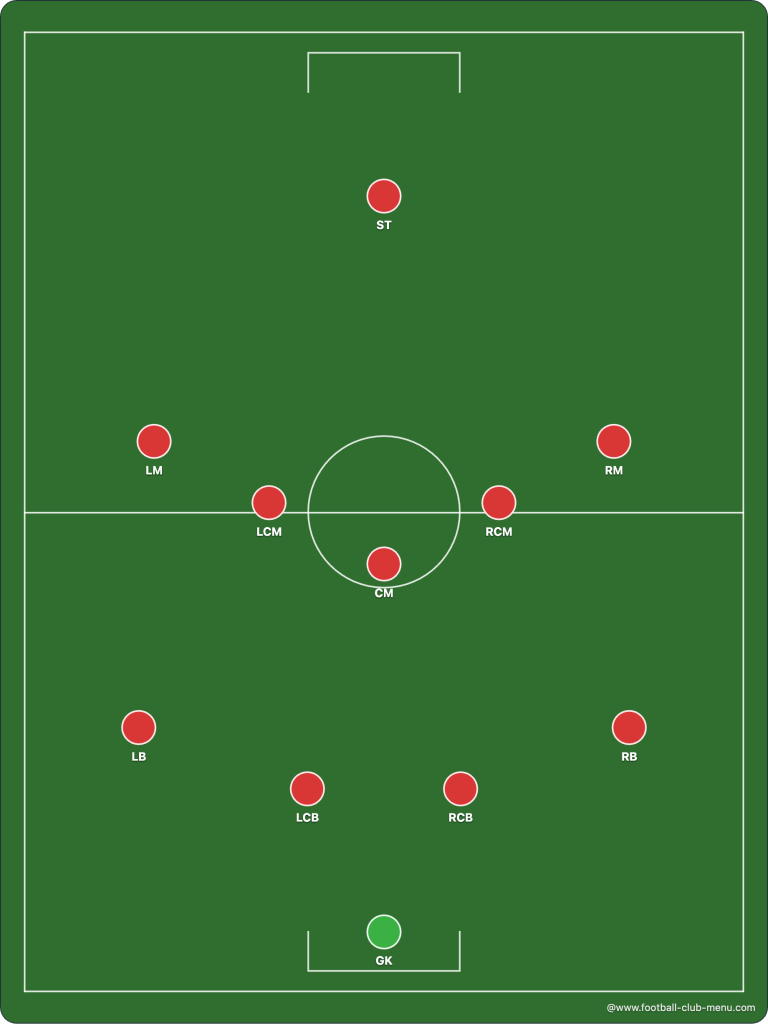
13. 4 – 5 – 1 Formation (Can Change into 4 – 3 – 3)
Layout
- 4 defenders
- 5 midfielders (can be 2 defensive midfielders + 3 attacking midfielders, or 3 central midfielders + 2 wingers)
- 1 center – forward
Pros
- The midfield density is extremely high when out of possession, suitable for retreating and contracting. When in possession, the two wings can press forward and change into a 4 – 3 – 3 formation to pressure the opponent.
Cons
- The problem of the single striker remains obvious, and the midfielders need to make significant forward runs. If the wings are not strong, it may become a situation of “crowding without passing the ball”.
Representative Clubs
- Manchester United, Chelsea and other giants often use the “conservative version” of 4 – 5 – 1/4 – 3 – 3 interchangeably in away Champions League games.
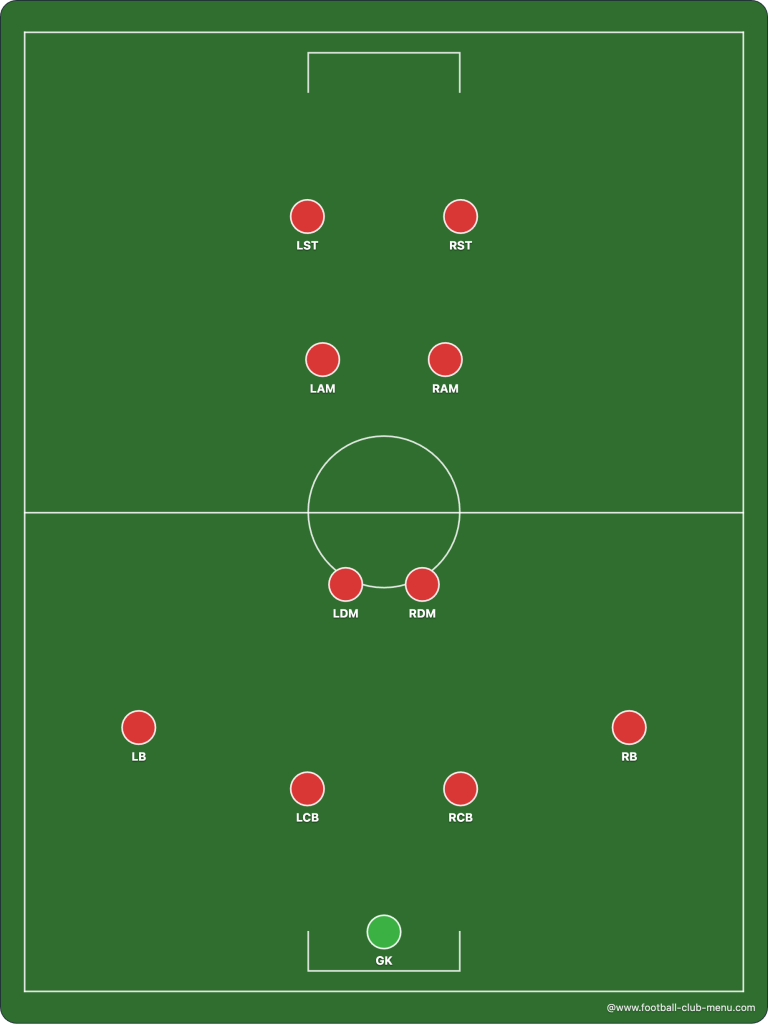
14. 4 – 2 – 2 – 2 Formation (Double No.10s/Brazilian – style Variant)
Layout
- 4 defenders
- 2 defensive midfielders
- 2 inside – moving attacking midfielders (similar to two No.10s, biased towards the wings and moving inwards)
- Double strikers
Pros
- The in – ward standing midfielders make full use of the space in the ribs, which is suitable for technical short – passing and confrontations. The combination of double strikers + double No.10s provides various options in front of the penalty area.
Cons
- The wings completely rely on full – backs to stretch the width. Once the physical fitness or defense can’t keep up, the wings will be exposed. During the defensive transition, if the two inside – moving midfielders don’t retreat, the double defensive midfielders will be under pressure.
Representative Clubs
- The Brazilian national team in Scolari’s era was often interpreted as a variant structure of 4 – 2 – 2 – 2. Some South American clubs still prefer the double – No.10 system in the league.
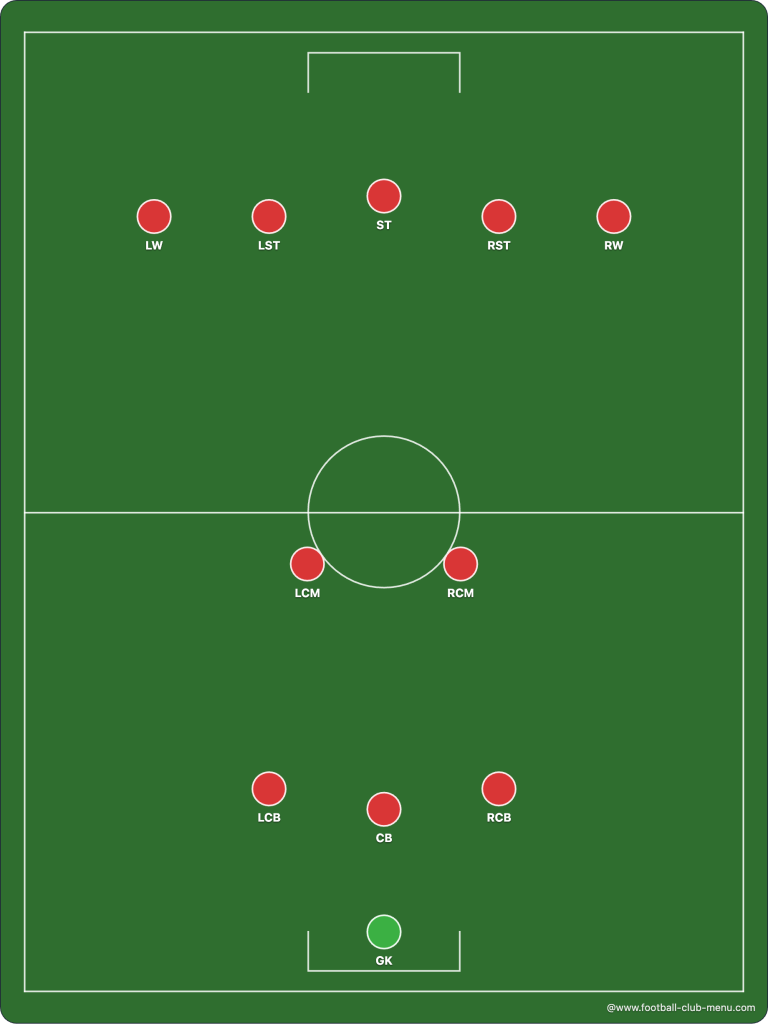
15. 3 – 2 – 5 Formation / 2 – 3 – 5 Formation (Modern Variant of the “WM” in Ball – control Phase)
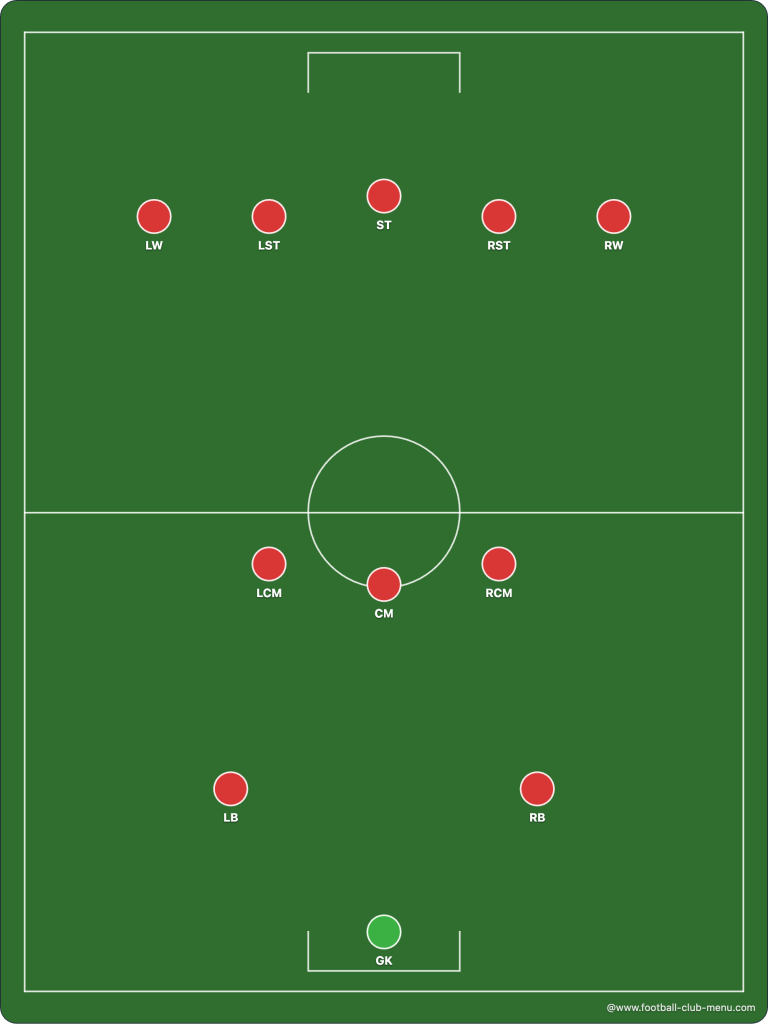
Layout (During Ball – control)
- Back – court: Goalkeeper + 2 defenders (or 3 back – court players)
- Mid – field: 2 – 3 inside – moving full – backs/midfielders
- Front – court: A five – man line in the front, covering both wings + two ribs + center – forward
Pros
- During attacks, the five – man front – court line maximizes passing lines and cooperation possibilities. The number of players in the back – court is controlled at 2 – 3, which is convenient for maintaining ball – control and counter – pressing structure.
Cons
- This is a “ball – control phase formation”. If the counter – press fails when losing the ball, the opponent will have a huge counter – attacking space. It requires the whole team to have a strong tactical understanding and physical support, which is difficult for ordinary teams to execute for a long time.
Representative Clubs
- Guardiola’s Manchester City often evolves into 2 – 3 – 5 or 3 – 2 – 5 positions during ball – control phases, regarded as a modern 复刻 of the WM. Arsenal under Arteta and Brighton under De Zerbi also show a similar “five – striker line” formation during ball – control.

Leave a Reply