


Offside in Football: From Past to Present Tactics
On the field, a smart offside – beating run can thrill fans. But an offside flag can break many goal dreams.
At the 2008 Euro, Group Stage Netherlands vs Italy, one of football’s most debated moments happened. In the 25th minute, the Netherlands got a free kick. Sneijder shot, and Van Nistelrooy tapped the ball into the net. All Italian defenders raised their hands for offside, but the referee said the goal counted.
Why? Italian defender Panucci fell outside the baseline after bumping into Buffon. FIFA Rule 11 says: “If a defender leaves the field and doesn’t return right away, they must be considered for offside.” So Panucci was treated as on the baseline, meaning Van Nistelrooy wasn’t offside. This correct – but surprising call showed how complex and important offside rules are.
At the 2008 Euro, Group Stage Netherlands vs Italy:
What Is the Offside Rule?
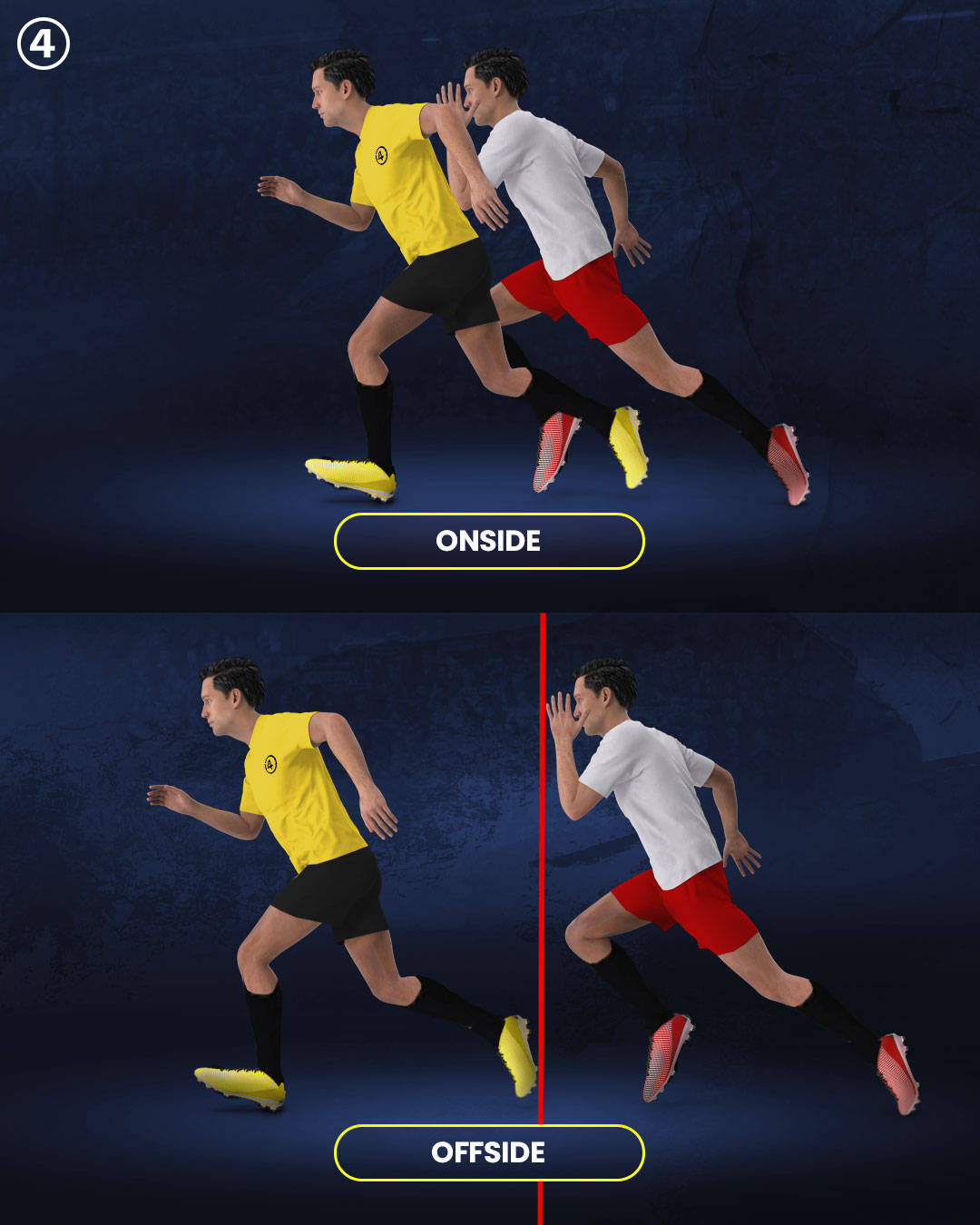
In modern football, offside happens when an attacker is closer to the opponent’s goal line than both the ball and the second – last defender when a teammate passes the ball, and they try to gain an advantage. The punishment is an indirect free kick from the offside spot.
But why does this rule exist? Let’s look at football’s early days.
Football Before Offside: Too Many Attacks, Not Enough Tactics
In the 1870s, football was very different. Teams used attacking formations like 1 – 2 – 7 or 1 – 2 – 2 – 6, with 6 – 7 forwards. This made the game unbalanced.
Back then, attacks often rushed forward, and defenses could easily counter – attack. With so many attackers, games were mostly long balls with little skill.
To fix this, football leaders added the offside rule in 1874. The first rule said: “An attacker is offside if only two defenders (including the goalkeeper) are in front.” That meant attackers needed at least three defenders ahead.
Rule Changes & New Tactics
The first offside rule balanced attack and defense, but coaches soon found ways around it. Nottinghamshire County started the “offside trap”, and Newcastle’s defenders used it well.
In 1925, Newcastle had six 0 – 0 draws, with only 2.58 goals per game. Low scores hurt ticket sales, so football bosses acted.
The English FA suggested two changes: lower the required defenders from three to two, or draw a line 40 yards from the goal where offside didn’t count. FIFA chose the first option, and it started in the 1925 – 1926 season.
Right away, goals per game jumped to 3.69. More importantly, it led to the WM formation, changing football tactics forever.
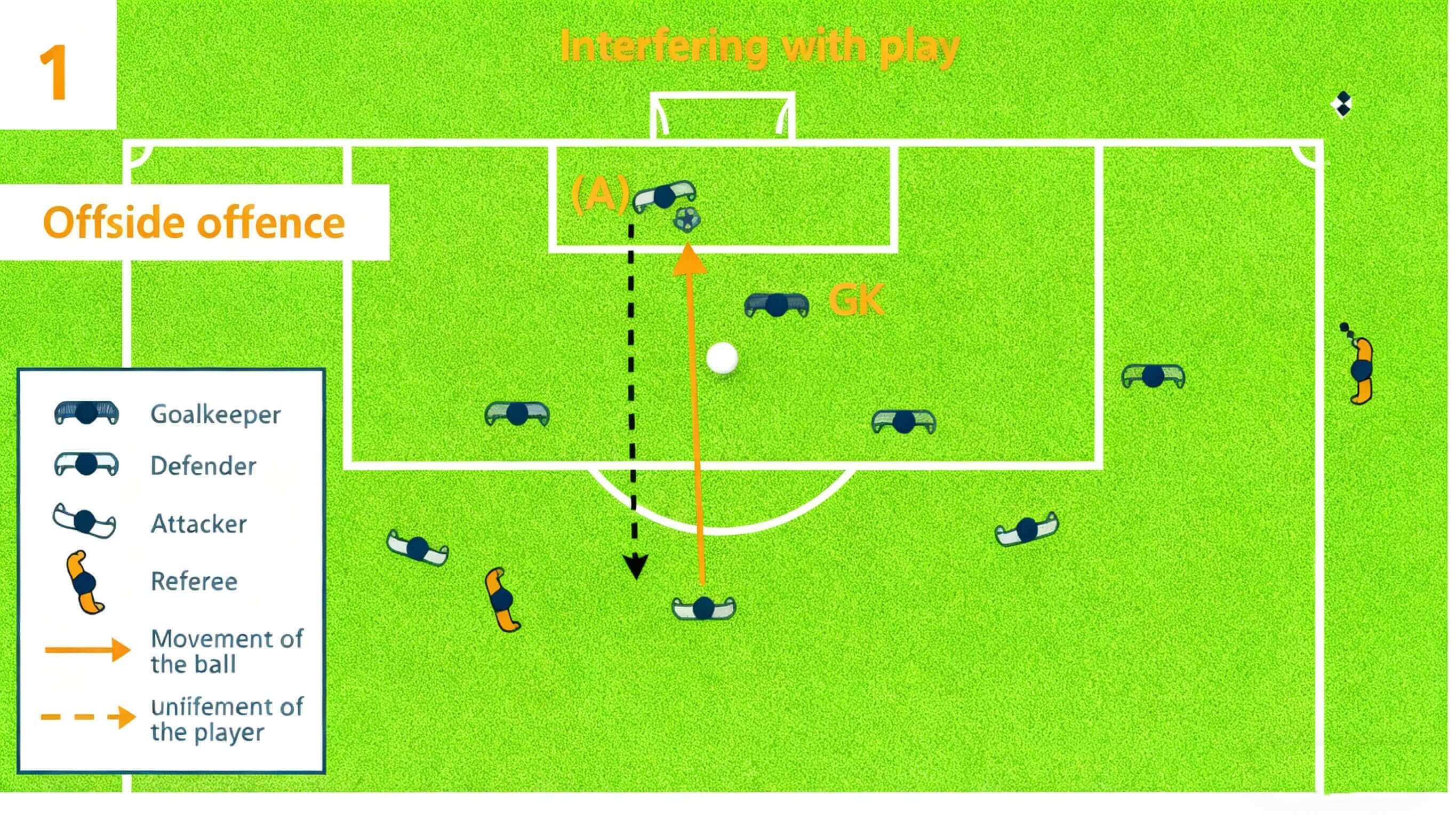
Attacker A is in an offside position, and in such a situation, his teammate still passes the ball to him. At this point, the linesman must signal to the referee that A is already offside.
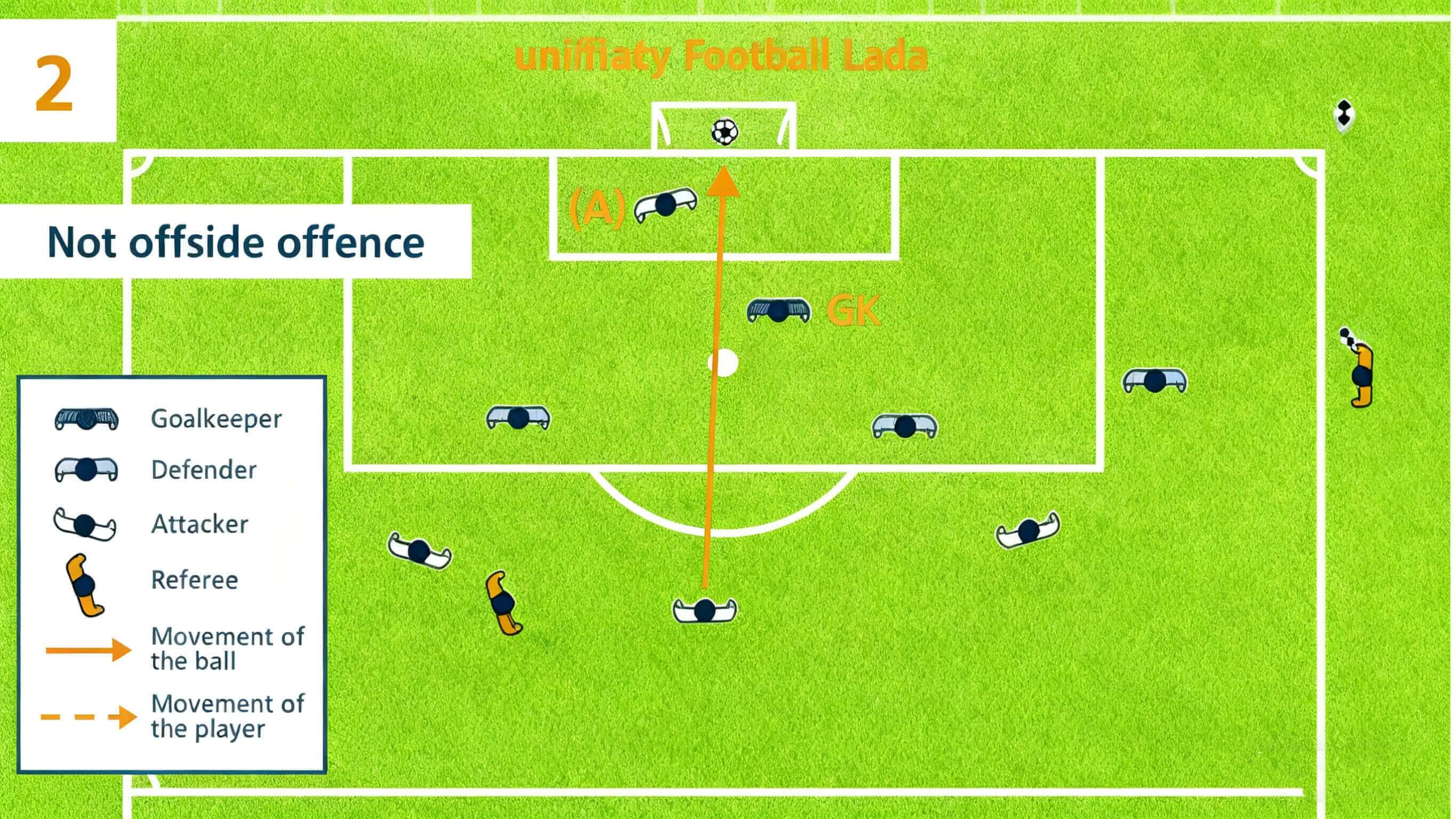
Attacking team A is in an offside position, and the attacking player did not pass the ball. Instead, they directly chose to shoot from the top of the penalty area and flew past the goalkeeper into the net. Even though the ball was close to A at one point, the goal was still valid.
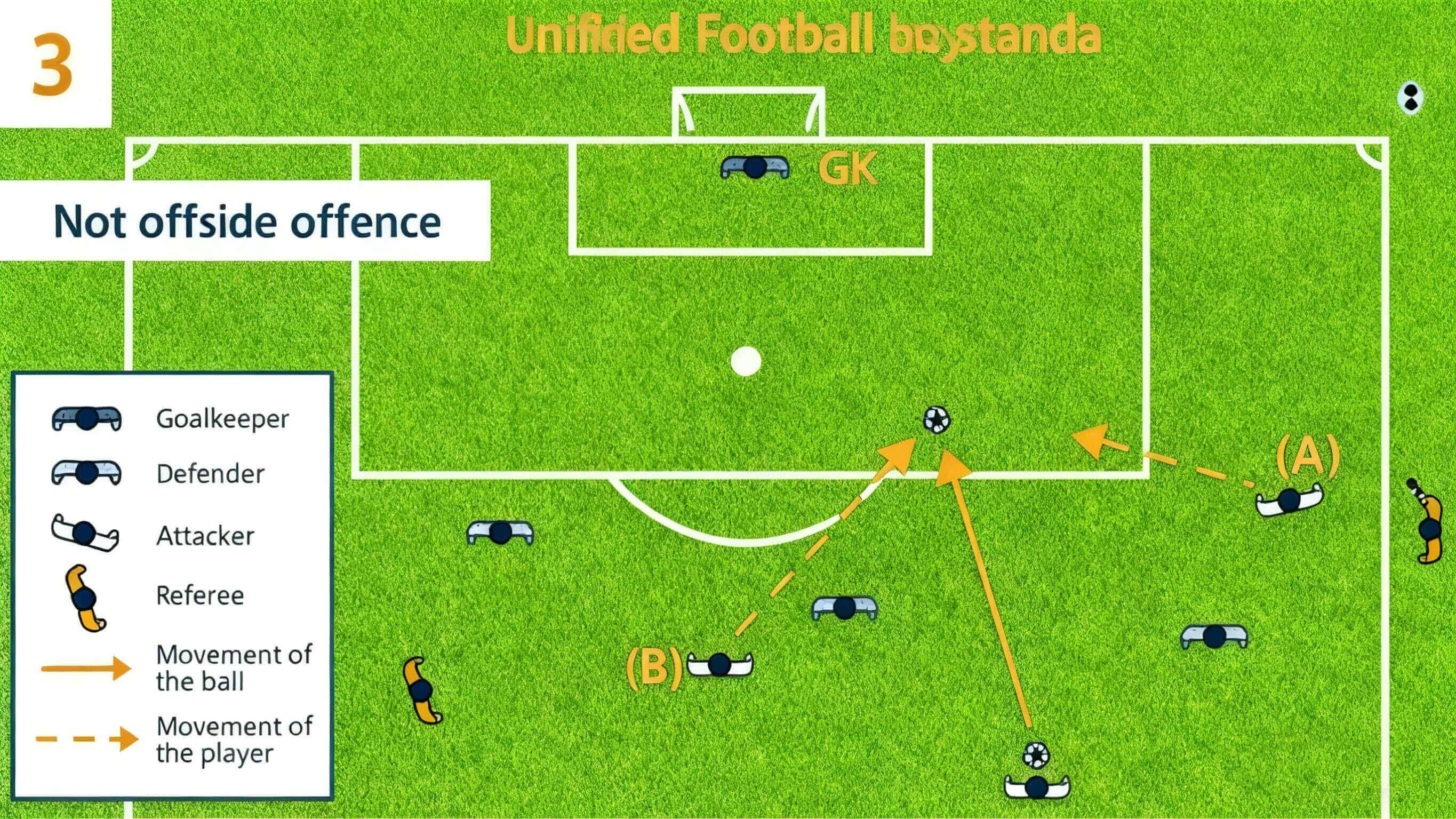
Attacking team A is in an offside position, and the player holding the ball is directly blocking. If A goes to get the ball, it will definitely be offside, but A did not try to get the ball, and instead attacking team B inserted and took the ball, it is not considered offside.
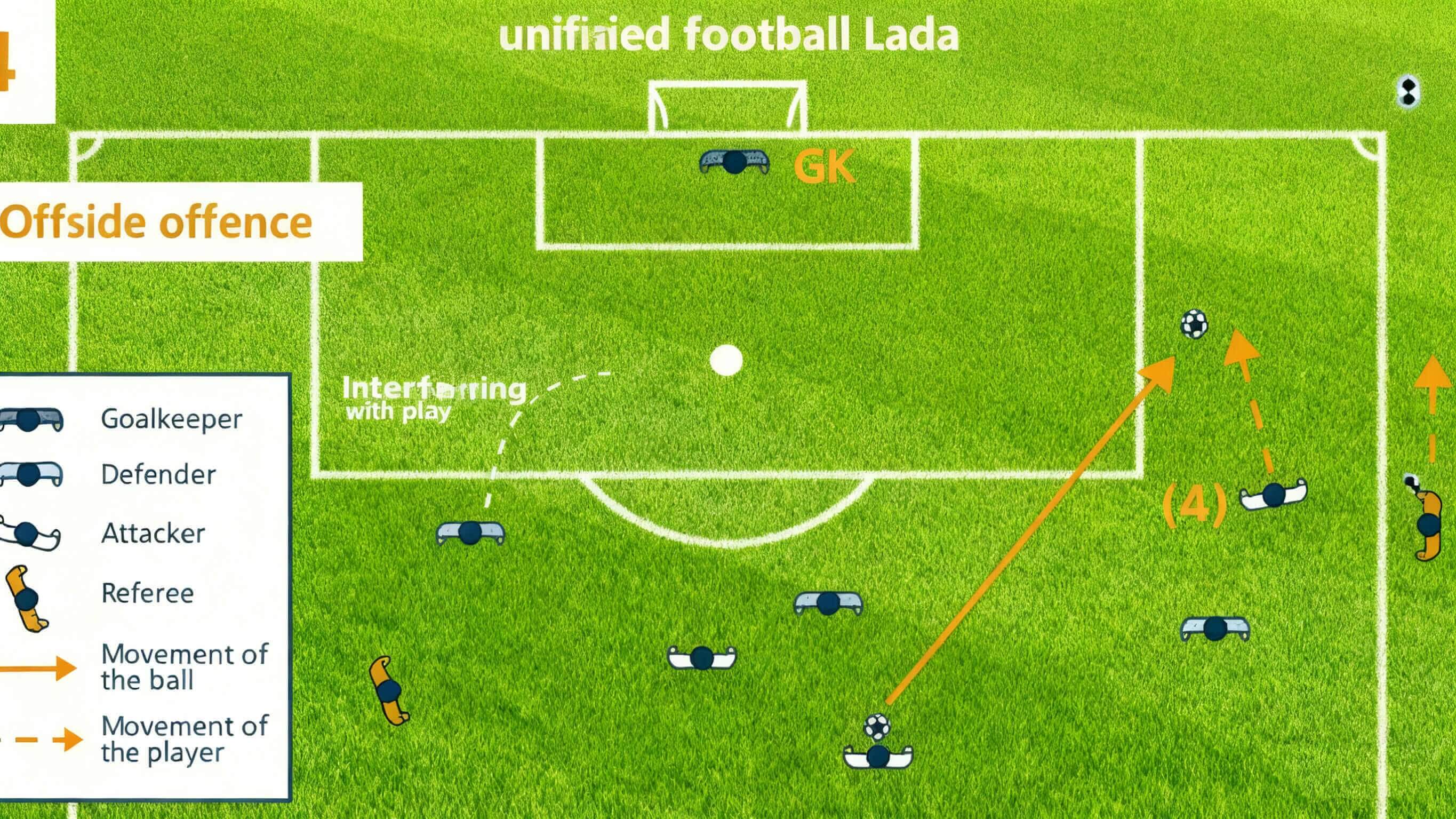
Attacking team A is in an offside position. The player holding the ball passes the ball, and A advances to chase the ball. The linesman must signal the referee that A is already offside.
Anti – Offside Tactics: Beating the Trap
As “offside traps” became common, “anti – offside” tactics appeared. These involve attackers timing their runs to avoid being offside when defenders move up.
Classic Anti – Offside Examples
At the 2005 Confederations Cup, Japan played Greece. Japan’s Nakamura passed to Daiki Iwamasa, who was level with Greece’s second – last defender, so the goal counted. This is a great anti – offside example.
AC Milan’s Filippo Inzaghi was also a master. He timed his runs perfectly, dropping back when defenders moved up and then sprinting forward to receive the ball, breaking the trap.
Modern Offside Tactics
Today, offside rules lead to many tactical plans. Here are some key ones:
- Offside Trap (Risky but Rewarding)
This is when defenders move up together to put attackers offside. In 2003, FIFA changed the rule: attackers are only offside if they gain directly. So defenders might set the trap but not get a call.
How to Beat It:
Watch defenders’ movement and pass at the right time.
Keep a player back to receive loose balls.
Use skills to dribble past instead of passing early.
- Anti – Offside (Breaking the Trap)
Attackers time their runs to get behind the moving defenders.
Tips:
Runners need good timing and speed.
Passers must pick the right moment.
Use teamwork to break through.
- Special Situation Tactics
Rules say these aren’t offside:
Receiving in your own half.
Getting goal kicks, corner kicks, or throw – ins.
Being level with the second – last defender.
Coaches use these to plan attacks, like on throw – ins.
Conclusion: The Eternal Game of Rules and Innovation
From the rule changes in 1925 to the current VAR – assisted officiating, the offside rules have been constantly evolving. In 2023, FIFA even trialed a new proposal put forward by Wenger. It states that an attacking player is considered offside only when their entire body crosses the second – last defending player.
As a veteran football fan with 20 years of experience, I’ve witnessed the whole process of the continuous development and improvement of the offside and anti – offside rules.
I understand that it is the development of these rules that has greatly enriched the spectacle of football. Just imagine, if there were no offside rules, attackers could simply stand behind the opponent’s defense line waiting for opportunities. How boring the game would be. It would just be a bunch of long passes and aimless shots. There would be no technical content or suspense at all.
The existence of the offside rules forces attackers to run more cleverly and look for loopholes in the opponent’s defense line. Every successful anti – offside move is like a wonderful battle of wits. It gets the audience excited.

Leave a Reply