

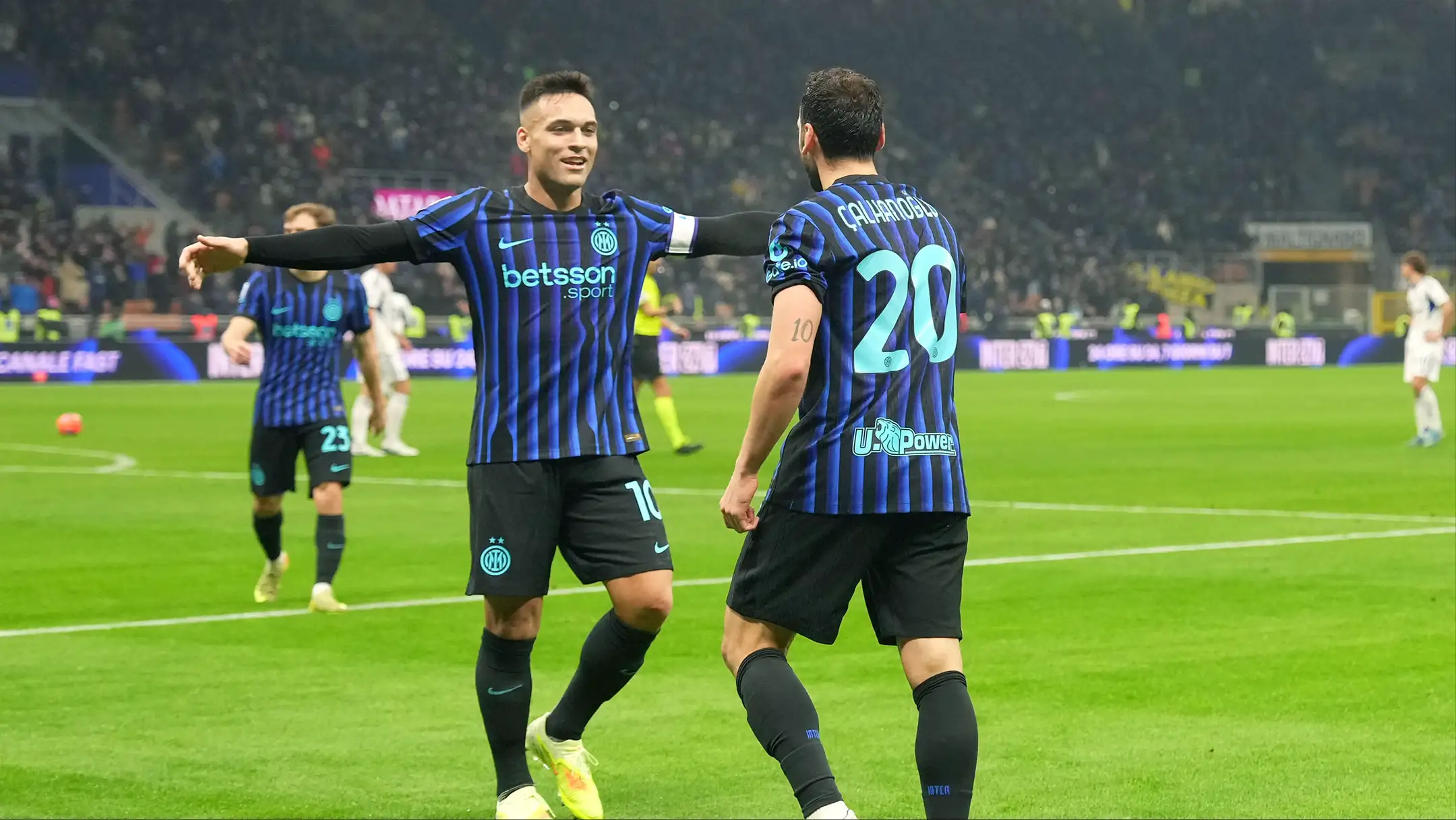
The Core Problem: A Terrible Record in Big Matches
When discussing Inter Milan’s 2025–26 season, one statistic dominates every serious analysis.
Against top-level opponents, results have been alarmingly poor.
So far, Inter have recorded just one win and five defeats in high-profile clashes.
The only victory came from a narrow 1–0 home win against Roma.
However, the defeats tell a much louder story.
Losses include:
- A dramatic 3–4 away defeat to Juventus
- A 1–3 loss away to Napoli
- A painful 0–1 home defeat to AC Milan
- A 1–2 away loss to Atlético Madrid
- A late 0–1 home defeat to Liverpool
Individually, these results may appear competitive.
Collectively, however, they reveal a systemic weakness.
Therefore, Inter’s issue is not margin, but consistency at the elite level.
Defensive Structure Under Pressure: When Small Errors Become Fatal
One of the clearest regressions appears in Inter’s defensive reliability.
Last season, Inter conceded an average of 0.9 goals per match.
This season, that number has risen to 1.1 goals per match.
The increase seems modest on paper.
However, against strong teams, its impact becomes severe.
In matches against Napoli and Juventus, goals came from avoidable mistakes.
Italian media described those moments as a “collective and individual collapse.”
That assessment reflects reality rather than exaggeration.
Even more concerning is the timing of these goals.
Inter have already conceded six goals after the 80th minute this season.
That figure accounts for more than one-third of total goals conceded.
Late defeats against Atlético Madrid and Liverpool underline the issue.
In both cases, Inter appeared close to securing a result.
Yet, concentration faded when pressure peaked.
At elite level, defensive stability is non-negotiable.
Currently, Inter fail that test too often.
Physical Decline and Squad Management Issues
Beyond tactics, physical performance tells a worrying story.
In recent Champions League matches, Inter collapsed physically in the final stages.
Against both Atlético Madrid and Liverpool, Inter’s attacking output vanished after the 75th minute.
Possession dropped below 40 percent.
Meanwhile, shots on goal nearly disappeared.
Fatigue did not appear suddenly.
Instead, it reflects deeper squad management problems.
Inter remain one of Europe’s oldest squads on average age.
Despite this, rotation remains limited in big matches.
Former captain Giuseppe Bergomi noted that Inter sometimes made only one substitution in decisive games.
This approach carries consequences.
A congested calendar, multi-competition pressure, and aging profiles combine dangerously.
As a result, players struggle to sustain intensity for ninety minutes.
At elite level, physical drop-off equals tactical collapse.
Tactical Transition Under Chivu: Ambition Meets Reality
Cristian Chivu’s tactical shift has also played a major role.
His philosophy emphasizes proactive football and high pressing.
He famously stated a preference for winning 4–3 rather than 1–0.
In theory, this approach suits modern football.
In practice, execution has proven inconsistent.
Against well-organized elite opponents, high pressing often fails early.
Once bypassed, large spaces appear behind the midfield.
Therefore, Inter fall into a dangerous cycle: unable to attack effectively, yet exposed defensively.
This imbalance defines several defeats.
Inter push forward without control.
Then, opponents exploit space ruthlessly.
In addition, in-game adjustments arrive too late.
Substitutions frequently come after the 70th minute.
By then, momentum has already shifted.
Tactical courage without structural protection becomes self-destructive.
Structural Squad Limitations
Personnel issues deepen these problems.
Several analysts, including Bergomi, have highlighted one key weakness.
Inter lack speed across multiple positions.
Without pace, Inter struggle against fast transitions.
They also fail to recover defensively after losing the ball.
Therefore, high-intensity matches consistently favor the opponent.
Injuries compound the issue.
Denzel Dumfries suffered a season-ending injury.
Francesco Acerbi missed over a month of action.
These absences disrupt defensive chemistry.
As a result, stability disappears precisely when needed most.
Physical duels also reveal decline.
Compared to last season, players like Lautaro Martínez and Nicolò Barella engage in fewer physical battles.
This drop directly affects midfield control.
Elite matches reward physical authority.
Inter increasingly lack it.
The Psychological Weight of Being Champions
Finally, mentality plays a decisive role.
Since winning the league title, Inter appear burdened rather than empowered.
In matches against Atlético Madrid and Liverpool, Inter grew conservative when draws seemed achievable.
Instead of pressing for control, they retreated instinctively.
Ironically, this invited decisive pressure.
Since the 2023–24 title, Inter have failed to win any of their last twelve matches against Milan, Juventus, and Napoli.
The record stands at five draws and seven defeats.
This trend suggests a psychological shift.
In big matches, players prioritize avoiding mistakes over creating chances.
Decision-making becomes cautious.
Technical execution suffers.
At elite level, fear replaces clarity quickly.
Inter currently play not to lose.
Strong opponents punish that mentality relentlessly.
What the Numbers Reveal (Data Table Placeholder)
| Category | Last Season | 2025–26 Season |
|---|---|---|
| Goals Conceded per Match | 0.9 | 1.1 |
| Goals After 80’ | Low | 6 |
| Big Match Record | Competitive | 1W–5L |
| Late Goals Conceded | Rare | Frequent |
Replace with official league and UEFA statistics before publishing.
Numbers confirm the eye test.
Decline is subtle but decisive.
Many Problems, One Pattern
Inter’s struggles against top teams do not stem from a single flaw.
Instead, multiple weaknesses converge simultaneously.
Defensive instability, physical decline, tactical imbalance, squad limitations, and psychological pressure reinforce each other.
Therefore, defeats feel repetitive rather than accidental.
Inter do not need a revolution.
However, they urgently need recalibration.
At elite level, courage must be supported by structure.
Ambition must be matched by control.
Without those adjustments, the pattern will persist.

Leave a Reply