

Why the Norway National Football Team Became So Strong All of a Sudden
— A deep dive into the quiet revolution behind Europe’s most unexpected rising powerhouse
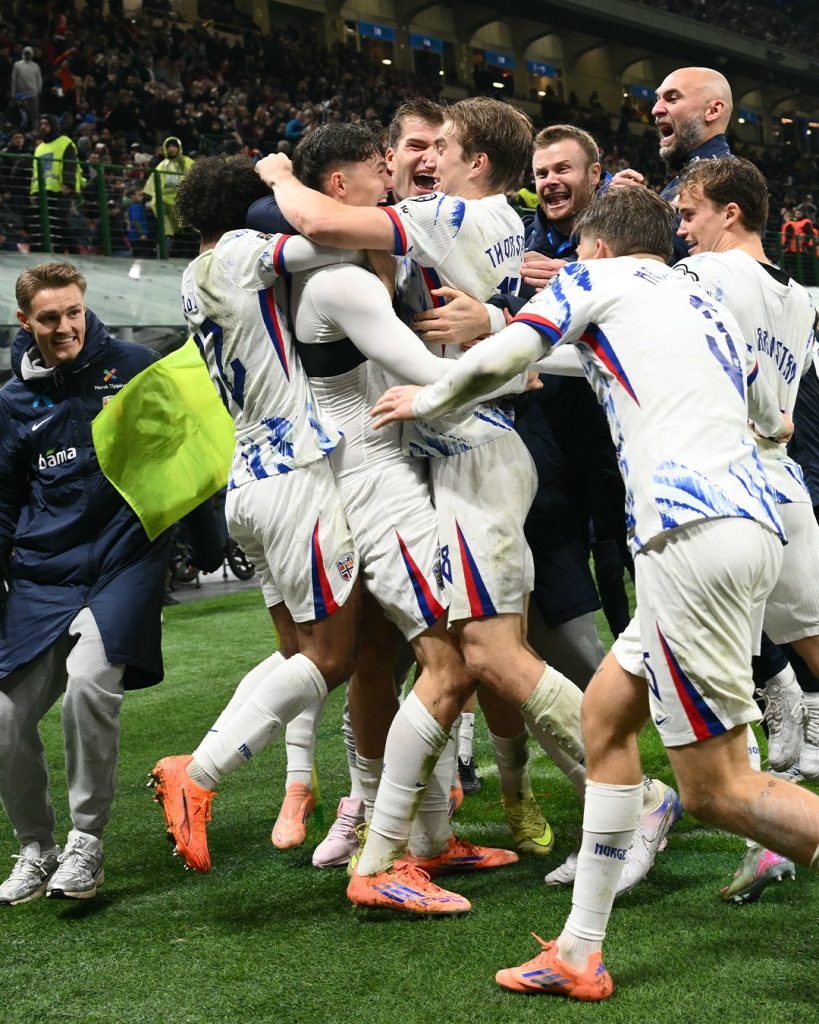
A New Nordic Roar
European football has a long history of sudden risers—teams that emerge from years of obscurity and instantly reshape the continent’s competitive landscape. But few transformations feel as dramatic, as data-supported, and as culturally meaningful as the Norway national football team’s surge.
For decades, Norway was seen as a hardworking but limited side: physically strong, defensively disciplined, occasionally upsetting a giant, yet rarely a real contender.
Suddenly, the narrative flipped.
When people ask “How did Norway get this good, this fast?” the answer is not a single golden player, nor a lucky tactical shift. Instead, it’s the convergence of a generational talent wave, a modernized footballing identity, and the fact that Norway’s top players are now embedded deeply inside the world’s strongest leagues and clubs.
The change is structural.
The timing is historical.
And the momentum is unmistakably real.
A New Generation Who Grew Up Studying Europe’s Elite
The single biggest factor behind Norway’s rise is not merely talent—it’s the type of talent that emerged within a 5–7 year span.
These players are not only good.
They are elite-trained, data-driven, and molded by European superclubs from a very young age.
Erling Haaland: The Most Efficient Goal-Machine of the 21st Century
It’s difficult to discuss modern Norway without starting here.
Haaland’s numbers across domestic and continental competitions are objectively historic:
- 36 Premier League goals in a single season — the all-time English top-flight record
- 91 goals in his first 100 Manchester City matches
- Champions League scoring rate above 1.00 goals per game in his first 30 matches
- Physically: 194 cm, 88 kg, sprint speed clocked at 36 km/h
- Finishing: over 60% of shots on target during his breakout EPL season
Haaland is not just a striker.
He is a gravitational force.
Opponents redraw their defensive map because of him.
But Norway’s strength is not built on a single star. The team’s modern identity comes from a core of players who grew together through youth systems across Europe.
Martin Ødegaard and the Rise of the Norwegian Playmaker Culture
Ødegaard’s rise is symbolic of Norway’s transformation from a direct, long-ball team into a possession-dominant, high-pressing modern side.
At Arsenal, he became:
- Captain at age 23
- A Premier League Player of the Season nominee
- A midfielder producing:
- 11–15 league goals per season
- 70+ chances created annually
- Pressing volume among the top EPL midfielders
Ødegaard represents a cultural shift:
Norway now produces technical controllers, not only physical finishers.
His presence balances Haaland’s explosiveness with structure, rhythm, and vertical passing patterns that echo Spain’s golden-era midfield philosophy—yet executed through a Scandinavian lens.
Not Just Two Superstars: A Complete Spine Emerges
The narrative of “Haaland + Ødegaard” is too simple. Norway’s rise occurs because the entire team is built around a spine that finally competes at big-league levels.
Alexander Sørloth
One of LaLiga’s most productive forwards, hitting:
- 19+ goals with Villarreal in recent seasons
- Aerial win rate above 50%
- A unique ability to combine with Haaland in dual-striker or shadow-striker systems
Martin Ødegaard’s Supporting Midfield Era
Players like:
- Sander Berge (Premier League, Sheffield United / Burnley):
- 1.95m, elite ball-carrying metrics
- Fredrik Aursnes (Benfica):
- One of Europe’s most versatile midfielders—can play full-back, double-pivot, or winger
These players give Norway tactical flexibility most Nordic teams historically lacked.
Defensive Stability Finally Arrives
With defenders such as:
- Kristoffer Ajer (Brentford)
- Leo Østigård (Napoli — Champions League squad member)
- Birger Meling (Ligue 1)
Norway’s backline now features players accustomed to:
- High-line defending
- Intense pressing
- Fast transitions
- Champions League / Europa League tempo
Traits that were not present in previous generations.
The Big Five League Shift
One of the most important statistical indicators of any national team’s quality is the percentage of its squad playing in Europe’s top five leagues (Premier League, Bundesliga, LaLiga, Serie A, Ligue 1).
In Norway’s case, the shift is astonishing.
Table: Norway National Team — Players in Big Five Leagues
| League | Key Norwegian Players | Status | Performance Notes |
|---|---|---|---|
| Premier League | Haaland, Ødegaard, Berge, Ajer | Regular starters | EPL goals, assists, and pressing metrics among elites |
| LaLiga | Sørloth | Starter | One of top scorers in Spain |
| Serie A | Østigård | Rotation / squad | Champions League appearances with Napoli |
| Ligue 1 | Meling | Regular | Strong defensive metrics |
| Bundesliga | (Fewer currently, but increasing among U21s) | Emerging | Youth academies pipeline improving |
Overall Big Five League Penetration
Over 50% of Norway’s starting XI are regular players in the Big Five leagues — a dramatic leap from the era when only one or two Norwegians played at Europe’s highest levels.
This level of exposure changes everything:
- Tactical intelligence
- Match rhythm
- Ability to adapt to pressing systems
- Psychological readiness for elite opposition
Norway is no longer learning from afar—they are participating from within.
A Long Game: The Hidden Influence of Norway’s Youth Academy Revolution
Behind the star names lies an infrastructural transformation that is often overlooked.
A decade ago, Norway invested heavily in:
- Modern training facilities
- Artificial pitches to withstand long winters
- Youth coaching certifications
- Partnerships with clubs in England, Germany, and the Netherlands
The result?
A higher percentage of Norwegian teens now train under European methodology than at any point in history.
Instead of producing generalist athletes, Norway began producing:
- Left-footed playmakers
- Press-resistant midfielders
- High-intelligence defenders
- Ball-playing goalkeepers
- Forwards trained in positional play systems
The country shifted from physicality-first football into intelligent, patterns-based football.
This is why modern Norway looks closer to Denmark, Croatia, or even the Netherlands rather than the older Scandinavian style.
A Football Identity Built on Data, Fitness, and Scandinavian Mentality
There is also something uniquely Nordic about Norway’s rise—discipline, cohesion, and tactical cooperation.
But this generation combines it with:
- GPS-driven physical conditioning
- Video-analysis culture
- Data-backed shot creation
- Tactical automatism learned abroad
While many countries still oscillate between coaches and philosophies, Norway’s identity is stable:
A high-pressing, direct-vertical, positionally intelligent team built around an elite No. 9 and a creative No. 10.
This clarity accelerates development.
The Psychological Effect of Having a Global Superstar
Every rising national team needs a catalyst.
For Portugal, it was Ronaldo.
For Wales, Gareth Bale.
For Egypt, Salah.
For Norway, the presence of Haaland changed expectations:
- Youth participation increased
- Media attention grew
- Players abroad gained credibility
- Opponents now game-plan seriously against Norway
A team that was once treated as mid-tier suddenly became “high-threat” simply because of the striker who may define a footballing era.
Competition inside the national team rose.
Professionalism rose.
Ambition rose.
The culture shifted from “try to qualify” to “expect to challenge.”
Coaching Stability and Tactical Maturity
Norway’s coaching direction emphasizes:
- Quick vertical transitions
- Wide-channel overloads
- High pressing using Haaland + Sørloth triggers
- Ødegaard as a central “rhythm conductor”
- Fullbacks pushing aggressively into the half-spaces
Norway has quietly become one of Europe’s most modernized tactical systems.
They don’t mimic England or Spain or Germany—they blend Scandinavian physicality with Bundesliga-style pressing and Premier League transitional aggression.
Why the Rise Looks Sustainable
The most exciting part of Norway’s surge is that it does not feel temporary.
Reasons this momentum is built to last:
- The average age of the core: 22–26
- Youth pipeline: U17–U21 teams featuring Bundesliga and Eredivisie academy players
- Elite coaching education system
- Increasing exports to Big Five leagues
- Tactical identity continuity
Even if Haaland or Ødegaard miss matches, the structure remains intact.
Norway now produces roles, not only stars.

Conclusion: A Sudden Rise Ten Years in the Making
On the surface, it feels like Norway exploded overnight—one season Haaland was destroying Bundesliga defenses, the next he was rewriting Premier League history, and suddenly Ødegaard became one of the world’s best playmakers.
But the truth is deeper.
Norway’s transformation is the result of:
- A decade of infrastructural investment
- A golden technical generation maturing simultaneously
- Big Five league integration
- A modernized football identity
- The psychological boost of having world-class stars
Norway didn’t suddenly become strong.
Norway finally became what years of planning quietly prepared them to be.
Their rise is not a story of luck.
It is the story of a nation that modernized itself—and is now watching the harvest bloom.
Just tell me what format you want next.

Leave a Reply